
Why “steady returns” changed my year (and my work)
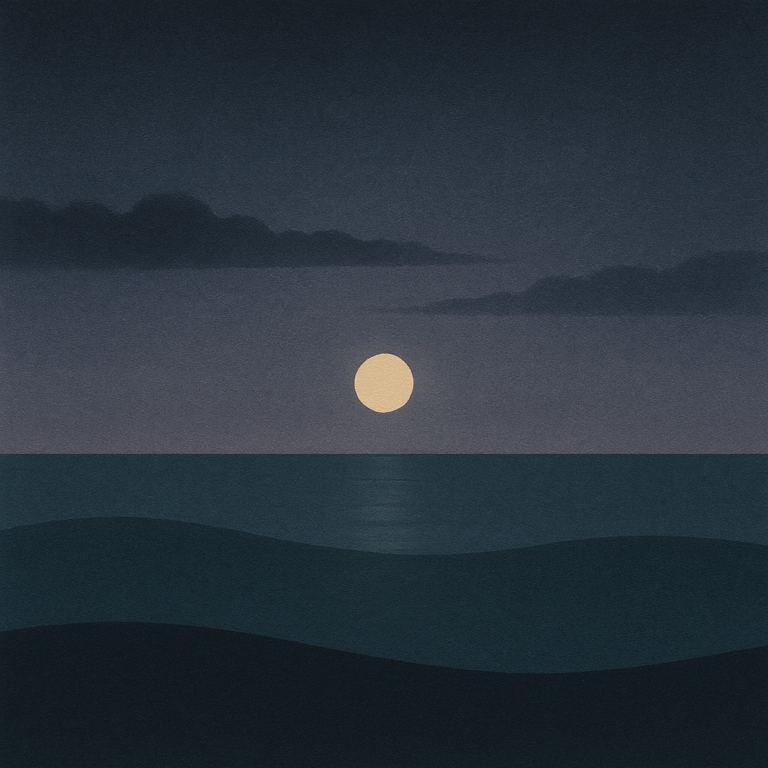
There’s a line I’ve returned to all year: you can’t out-swim the tide. I live on the coast; the horizon tells the truth twice a day. The water comes in, the water goes out, and the shore is still the shore. This year asked me to remember that in my work—especially the work that matters to Beaming Bernie—steady returns beat heroic pushes.
Early in the spring I tried to sprint through a rebuild. I stacked plans like sandcastles: beautiful, detailed… and defenseless. The first wave of competing priorities arrived and took the edges with it. Another tide, then another, and I felt that familiar tug: make a bigger plan. Work later. Push harder. It’s tempting to call that resilience, but the truth is I wasn’t returning; I was bracing.
The turn came when I started measuring progress by “came back” rather than “did everything.” A single page opened again. A paragraph revised. A quiet check-in with myself before I reached for the next task. The practice was small enough to feel almost unserious; the results were anything but. When I showed up gently, I stayed. And when I stayed, the work started to hold.
There were weeks when the rebuild felt messy—public drafts, rethinks, redesign 1 into redesign 2. I noticed my own mind go to that old default: either it’s finished or it’s a failure. But the sea has no on or off. It just keeps moving, and somehow the movement makes space for new ground. My work did the same. Each return arrived with a fraction more clarity. Not a leap, a learning.
What Steady Returns Look Like
Here’s what that looked like in practice:
I re-framed progress as found again, not proven again. The work didn’t ask me to be perfect; it asked me to come back.
I set a “minimum lifeline” for creative work: one tiny return I could make no matter how busy the day became. Sometimes it was seven minutes; sometimes it was even less. But I did it on purpose. I counted it.
I separated “what’s real now” from “what I wish the week looked like.” That single distinction cleared enough emotional noise to hear the next right step.
The Confidence that comes from Continuity
There’s a kind of confidence that grows when you choose continuity over spectacle. It’s quieter, but it lasts. I saw it in small ways first—copy that read cleaner after two brief passes instead of one heroic rewrite; a product outline that stayed aligned because I came back the next day and asked, “Does this still serve?” Later, I saw it in bigger ways—framework decisions made from steadiness rather than adrenaline, and an ability to invite others into the process without panic about being “not quite finished.”
How I found my way: The Skills Map
This is where the map came in. When life is loud, the brain loves a tidy grid. I resisted at first—mapping felt like another potential sandcastle. But the right kind of map isn’t a castle; it’s a shoreline sketch. It shows you what’s already there so you can choose where to stand next. I took seven minutes, listed the skills I actually used this year (not the ones I thought I should have used), circled the ones that still mattered, and drew a single arrow: today → next useful move.
The effect was disproportionate. A seven-minute map quieted a seven-day spiral. It reminded me that steady returns are practical, not poetic: map the ground, pick one step, return tomorrow. That rhythm beat the noise in three ways:
It lowered the activation energy. I didn’t need to renegotiate with myself for an hour; I needed to reappear for a few minutes.
It preserved attention. Because the map lived outside my head, my head didn’t have to hold it all.
It kept meaning intact. The map kept pointing at why a step mattered, so the step didn’t shrink into busywork.
There are people who love the dramatic reveal—the before/after, the transformation montage. I understand the pull. But these last months taught me that my favourite stories are the ones told by returning: the draft that becomes a page, the page that becomes a tool, the tool that helps someone else return to themselves. There’s a realism to it. There’s also relief.
What it could mean for you
If you’re at a point where life is rearranging the furniture without warning, where interruptions undo your best-laid timelines, where the year felt like three different seasons layered on top of each other, here’s my invitation: don’t scale your return to match the chaos. Shrink your return until it’s doable, then keep it. Seven minutes is enough to come back to what matters. Seven minutes is enough to see your shoreline again.
And if you’re rebuilding a sense of self alongside the work, you’re not behind. You’re becoming—slowly, consistently, in a way that holds. The proof isn’t in the plan; it’s in the return. The tide knows.
This is how I’m closing the year: map what I already carry, choose what still matters, and practice the small, human act of coming back. Not boom, not bust. Rhythm.
Explore This Further
🟡 Learn to Learn: Skills Mapping Grid → If you’re ready to see what you already know and and where to focus next.
🟡 Reinvention Hub: Reflect → Find your footing after redundancy or sudden change: Reflect explores moving from fog to focus — steadying emotions and urgent tasks side by side with practical, evidence-based tools.
People Also Ask
How do “steady returns” actually move a big goal forward?
By lowering the bar to re-entry. Small, reliable touchpoints compound faster than sporadic sprints. Each return preserves context, so you waste less time restarting and more time progressing with intent.
What is a 7-minute skills map and when should I use it?
It’s a quick scan of what you already carry (skills, wins, constraints) and one arrow to the next useful move. Use it when you feel scattered, after interruptions, or at the start/end of a week to reset direction without overplanning.
Isn’t consistency just another word for pressure?
Not here. Consistency in this context means minimum lifelines—tiny, humane actions that are doable on your busiest days. It’s pressure’s opposite: a steady rhythm that prevents boom-and-bust and keeps meaning intact.